
From 6.5 to 9.0: The IELTS Strategy That Worked
Even candidates with strong English skills can end up with Band 5.0 in IELTS Writing and Band 6.5 in Reading. This exact situation happened to Harsh Deep, who was preparing for her third attempt with only three weeks remaining before she would be required to leave Canada. Despite her strong English proficiency, her previous strategy had yielded disappointing results.
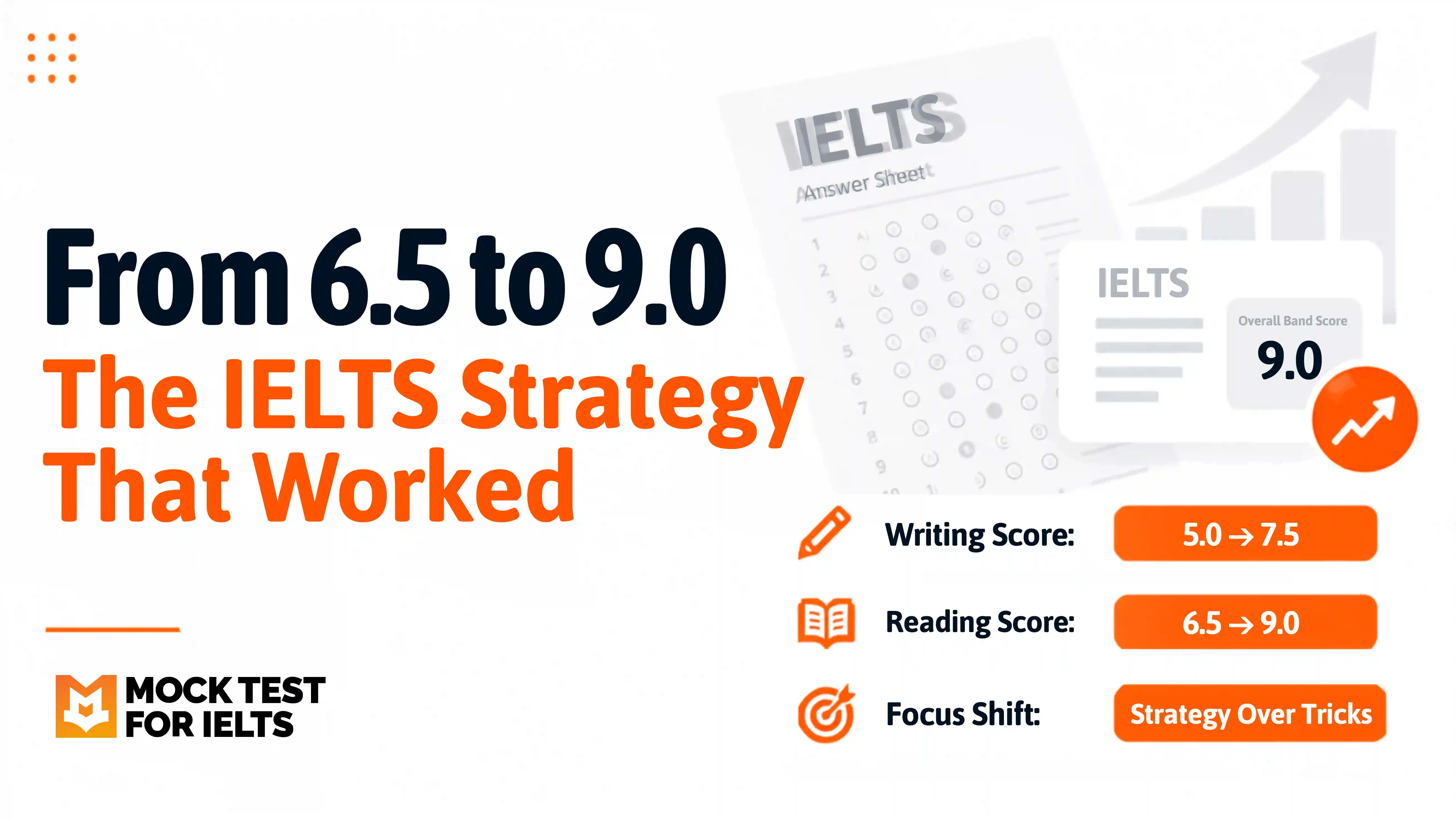
By identifying specific test-taking mistakes rather than trying to overhaul her English foundation, she was able to boost her scores from Band 5.0 to 7.5 in Writing and from Band 6.5 to a perfect 9.0 in Reading within just three weeks.
Why Strong General English Isn't Enough: First Attempt Pitfalls
Harsh Deep's initial attempt suffered from overconfidence regarding the test structure. Living in an English-speaking environment led her to assume that writing extensively in English would automatically earn a high score.
When presented with an essay prompt asking whether professionals trained in a country should be required to work there or be free to work abroad, she wrote broadly about visas, immigration, and moving overseas simply to meet the word limit. Rather than answering the specific prompt requirements, she delivered general background information.
This mistake resembles ordering a specific dish at a restaurant and receiving a generic bowl of food—it fails to fulfill the exact request made by the examiners. The IELTS Writing assessment evaluates whether a candidate can communicate clearly in direct response to the specific prompt provided.
The Danger of Information Overload: Second Attempt Mistakes
For her second attempt, Harsh Deep turned to YouTube, binge-watching videos and six-hour study sessions from various channels. However, collecting conflicting advice—such as whether to use fancy vocabulary versus simple words, or rigid templates versus flexible structures—created confusion.
This overload of contradictory strategies created stress, doubt, and panic during the examination. Despite her advanced language capabilities, she failed to secure the necessary scores on her second try.
The Three Strategies That Transformed Her Scores
Instead of attempting to learn new vocabulary or complex grammar, her preparation shifted toward eliminating bad habits and focus-draining distractions.
1. The Sniper Approach vs. The Shotgun Approach
Harsh Deep replaced the "shotgun" method—spraying broad topic information across the essay hoping something would impress the examiner—with a "sniper" strategy.
This involved three focused steps:
- Thoroughly analyzing the specific essay question.
- Identifying the exact requirements requested by the prompt.
- Structuring the response to deliver precisely what the scoring criteria require.
2. Keeping Vocabulary and Grammar Clear and Comfortable
Trying to insert complex, unfamiliar phrasing can backfire by introducing errors. These errors can negatively affect all four IELTS Writing criteria:
- Task Response
- Coherence and Cohesion
- Lexical Resource
- Grammatical Range and Accuracy
Shifting to clear, familiar language and comfortable sentence structures prevented unnecessary mistakes. Simplifying her language made her essay easier to read, which improved her scores.
3. Treating the Reading Test as a Reading Test
In previous attempts, Harsh Deep relied on YouTube "tips and tricks" and artificial time-management hacks during the Reading module. Relying on shortcuts led to time pressure and panic.
By abandoning tricks and using standard reading skills to locate answers directly in the text, her time management improved completely. She completed the Reading module with time left over to review her answers.
The Final Outcome
Focusing on targeted test execution rather than accumulating more general study tips enabled Harsh Deep to complete her exam with extra time to review.
Her Writing score increased to 7.5, and her Reading score reached a perfect 9.0, allowing her to meet her requirements and stay in Canada.
The biggest improvement did not come from learning thousands of new words or memorizing complicated templates. It came from understanding what IELTS actually rewards.


