
How an English Graduate from Bangladesh Won Two Fully Funded ICCR Scholarships
From English Graduate to Two Fully Funded Scholarships: Imamul Mottakin’s Journey
For many students studying English, Literature, Linguistics, Cultural Studies and other humanities subjects in Bangladesh, the dream of studying abroad with a fully funded scholarship can often feel difficult to achieve.
Scholarship discussions are frequently dominated by STEM subjects such as engineering, medicine, technology and science. As a result, many students from non-STEM backgrounds assume that their opportunities are limited.
The journey of Imamul Mottakin, however, shows that humanities students can also compete successfully for prestigious international scholarships.
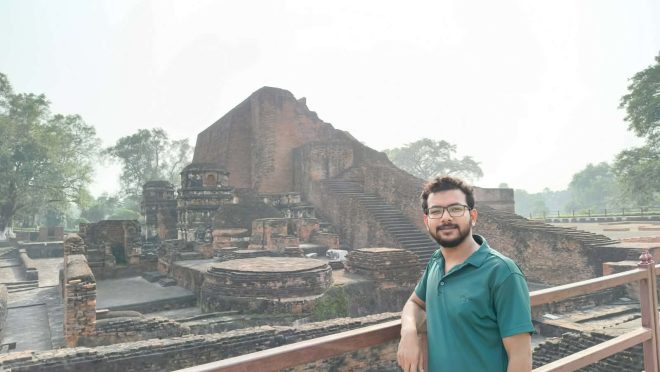
After completing his Bachelor's degree in English from the University of Asia Pacific (UAP) and later earning a Master's degree in Cultural Studies from the University of Liberal Arts Bangladesh (ULAB), Mottakin secured a fully funded ICCR Scholarship to pursue a Master's in World Literature at Nalanda University in India.
His scholarship journey continued when he secured another fully funded ICCR Scholarship to pursue a PhD in English at the University of Kerala.
His success shows that students from English and other humanities disciplines can also create strong international academic opportunities when they prepare strategically.
Fully Funded Scholarships Are Not Just for STEM Students
One of the most common misconceptions among students is that fully funded scholarships are mainly designed for engineering, medical, science or technology students.
Mottakin himself once believed something similar.
However, his academic journey showed him that many opportunities are available in Social Sciences and Humanities as well.
While undergraduate funding opportunities may sometimes be comparatively limited, students can find many more options when applying for Master's and PhD programmes.
Choosing the right university and field of study is also extremely important.
Applicants should be able to explain why they want to study a particular subject and how the knowledge they gain abroad could eventually contribute to society and their home country.
Scholarship authorities are often interested in applicants who can demonstrate a clear purpose behind their education.
Therefore, students should focus not only on where they want to study, but also on what impact they hope to create through their education.
Planning to Study Abroad on a Scholarship?
Start with a strong IELTS score. Practice all four skills, track your progress, and prepare smarter with MockTestForIELTS.
What Is the ICCR Scholarship?
The Indian Council for Cultural Relations (ICCR) provides scholarship opportunities for international students who want to pursue higher education in India.
ICCR was established on 9 April 1950 and has played an important role in developing cultural and academic relationships between India and other countries.
India has a rich intellectual and cultural tradition covering areas such as literature, Sanskrit studies, linguistics, philosophy, Yoga, Ayurveda and many other fields.
Through ICCR scholarship programmes, international students can study at Indian universities while also experiencing the country's diverse academic and cultural environment.
Building a Strong Scholarship Profile
Preparing for a competitive scholarship should ideally begin during the early years of undergraduate study.
A good academic record is important because CGPA is often one of the first elements considered during scholarship selection.
However, strong grades alone may not be enough.
Mottakin built a competitive profile by combining academic excellence with extracurricular and research activities.
During his undergraduate studies, he:
- Graduated first in his batch
- Received Vice-Chancellor's and Dean's Awards
- Led a reading circle through the UAP Literary Club
- Participated in drama competitions
- Presented research papers at national and international seminars
- Took part in activities beyond regular academic coursework
These experiences helped him demonstrate leadership, communication skills, academic ability and research interest.
Students planning to apply for scholarships can strengthen their profiles through conferences, seminars, university clubs, internships, volunteering programmes and research activities.
Such experiences can show that an applicant is capable of managing responsibilities while continuing to develop different skills.
Documents Required for the ICCR Scholarship
Bangladeshi students interested in applying for the ICCR Scholarship need to carefully complete the required application process.
Applicants may need to register through the Suborno Jayanti Scholarship Portal before completing their application through the ICCR A2A Scholarship Portal.
Commonly required documents may include:
- Academic certificates and mark sheets
- A valid passport
- Medical fitness certificate
- Academic reference letters
- Statement of Purpose or scholarship essay
- Updated CV or résumé
- Other documents requested by the university
Requirements may vary depending on the programme, institution and level of study.
Applicants should therefore review the admission requirements of their chosen universities carefully before submitting an application.
IELTS, TOEFL and English Proficiency
English-language proficiency can also strengthen an application, particularly for students applying to programmes in English or other humanities disciplines.
Depending on the university, having a good IELTS or TOEFL score can be beneficial.
However, ICCR applicants may also have to take an English Proficiency Test (EPT) conducted through the High Commission of India.
This means that applicants may still be required to complete the EPT even if they already have an IELTS or TOEFL score.
For Mottakin, his IELTS performance together with successfully completing the required English-language assessment contributed positively to his application.
Why the Scholarship Essay Matters
Writing plays an important role in almost every major scholarship application.
In many scholarships, students are required to submit a traditional Statement of Purpose explaining their academic background, interests and future goals.
The ICCR application process may also include a more personal form of essay.
Applicants may be asked to discuss achievements outside academics, personal challenges, important experiences, things they feel proud of or perspectives that reveal their personality and values.
A strong essay should help the selection committee understand the applicant beyond academic grades.
Students should therefore work on developing strong writing skills so they can express their experiences, motivation and future plans clearly.
For English department students, this can become a major advantage because writing, interpretation and communication are already central parts of their academic training.
Preparing for a Fully Funded PhD
Applying for a fully funded PhD is generally more demanding than applying for a Master's programme.
At the doctoral level, applicants are expected to demonstrate strong research potential.
A detailed research proposal is often one of the most important parts of the application.
The proposal should clearly explain the research problem, demonstrate originality and show why the proposed study could make a meaningful academic contribution.
PhD applicants may also need to go through several stages of screening, including written examinations and interviews.
Previous research experience can significantly improve an applicant's chances.
Having a research article or paper published in a recognised national or international journal can provide an additional advantage.
Participation in conferences, academic seminars and research projects can also help students demonstrate that they are prepared for doctoral-level research.
What Does the ICCR Scholarship Cover?
One of the biggest attractions of the ICCR Scholarship is the level of financial support available to selected students.
Depending on the scholarship scheme and applicable conditions, support may cover major expenses such as:
- Tuition fees
- Living expenses
- Round-trip airfare
- Health insurance
- Visa-related expenses
- Other applicable allowances and facilities
This financial support allows students to focus more fully on their studies, research and academic development.
It also gives international students an opportunity to experience India's academic and cultural diversity without carrying the full financial burden of studying abroad.
How English Students Can Start Preparing
Students interested in fully funded scholarships should not wait until graduation to start preparing.
Beginning from the first or second year of undergraduate study can make a significant difference.
Students can start by identifying a research area that genuinely interests them.
They can then discuss that area with faculty members, attend conferences and seminars, explore academic literature and gradually develop research experience.
University assignments and term papers can also be used strategically.
Instead of selecting completely unrelated topics for every assignment, students can sometimes align their coursework with the research area they may want to pursue later.
Over time, this can help them develop deeper knowledge and build a stronger academic profile.
English students can also benefit from participating in:
- Research projects
- Academic conferences
- Seminars and workshops
- Leadership activities
- University clubs
- Volunteering
- Internships
- Public speaking
- Academic writing
- Research publication
A strong scholarship profile is usually built through a combination of academic performance, extracurricular involvement, communication skills and research experience.
The Bigger Lesson for Humanities Students
Imamul Mottakin's journey challenges the idea that fully funded international scholarships are mainly available to STEM graduates.
Students from English, Literature, Linguistics, Cultural Studies and other humanities disciplines can also compete for prestigious scholarships.
However, preparation matters.
Maintaining a good CGPA is important, but students should also work on research experience, extracurricular activities, communication, leadership and academic writing.
Most importantly, applicants need to develop a clear reason for pursuing higher education.
A scholarship application becomes much stronger when students can explain not only what they want to study, but also why their chosen field matters and how they hope to use their education in the future.
For students who believe that studying a non-STEM subject automatically limits their chances of receiving a fully funded scholarship, Mottakin's experience offers another perspective.
With focused preparation, research experience, strong writing skills and a competitive academic profile, humanities students can also pursue fully funded Master's and PhD opportunities abroad.
Source: TBS Graduates — Think scholarships are only for STEM? How an English graduate earned two fully funded scholarships https://tbsgraduates.net/success-story/think-scholarships-are-only-for-stem-how-an-english-graduate-earned-two-fully-funded-scholarships/


